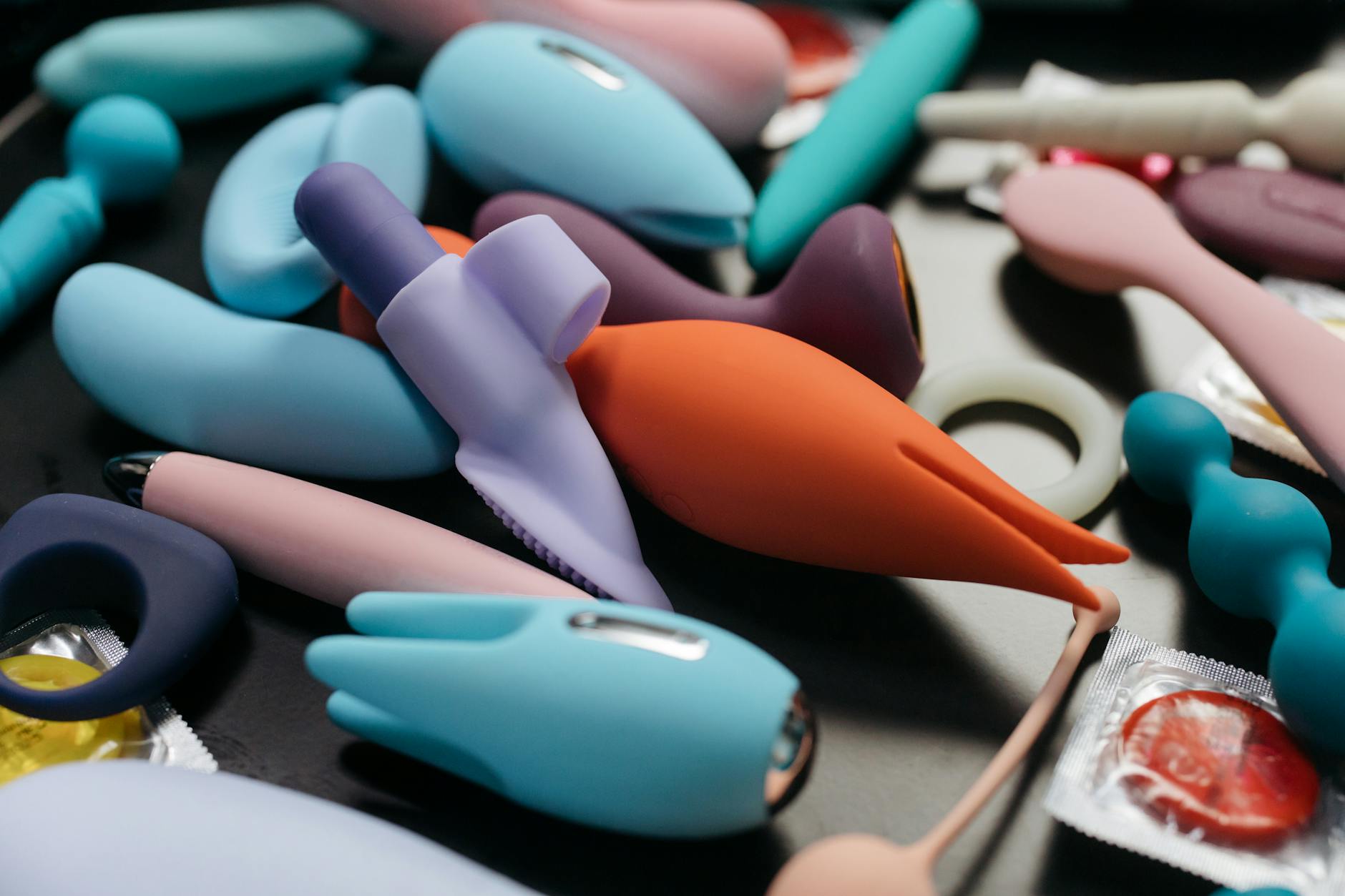
How to Use Lemon Vibrators With a Partner After Years of Monogamy
Here's what nobody says about long-term monogamy: by year five or ten or twenty, sex often becomes a habit you both know how to execute. You know each other's rhythms. You know what usually works. And then one day, neither of you is quite sure if the familiar feeling is comfort or routine.
Introducing a lemon clitoral vibrator into that dynamic is not about admitting the relationship is failing. It's the opposite. It's a signal that you're both willing to stay curious.
Why introducing toys feels harder after years together
The longer you've been with someone, the heavier the unspoken rules become. If you've spent fifteen years having sex a certain way, suggesting something new can feel like you're saying "this isn't working anymore" even when that's not what you mean at all.
There's also shame layered in. By midlife, many people have absorbed the message that wanting more, wanting different, or wanting toys means their partner isn't enough. This is completely untrue, and it's also wildly common. I see this in my practice constantly.
The additional weight: if your partner has always been the one initiating pleasure, or if you've never explicitly talked about your own needs, bringing a lemon vibrator into the room suddenly makes visible all the conversations you haven't had.
That visibility is actually the gift, even though it feels risky.
The conversation before you bring anything into the bedroom
Don't ambush your partner with a toy. This is not the moment for surprise.
Instead, pick a calm moment outside the bedroom. Not during sex, not right before. Maybe during a walk, or over coffee on a Sunday morning. The opening line matters.
"I've been thinking about us, and I want to try something new together" works better than "Our sex life is boring" or "I read that vibrators help."
Be specific about why you want to bring a lemon clitoral vibrator in. The honest version usually sounds like one of these: "I want to feel more in my body with you," or "I'm curious what this feels like," or "I think it might feel good for both of us, and I want to explore that together."
Then stop talking and listen. Your partner's first response might be hesitation, curiosity, defensiveness, or excitement. All of these are okay. Defensiveness often just means they need reassurance that this isn't about inadequacy. It's about expansion.
After years together, a toy isn't a replacement. It's permission to stay interested in each other.
How to physically introduce it
Start small. Don't make the first time involve lingerie, rose petals, and a whole orchestrated scene. That can come later if you both want it. The first time is about information gathering.
Use a lemon clitoral vibrator designed for partnered play. The suction-based design of something like the Lem means you're not replacing penetration or oral sex. You're adding a new layer of sensation that can happen alongside what you already do.
Begin with a lower intensity setting. Set 1 or 2. Let your partner explore the sensation solo first if they want to. There's no rush. Your body already knows how to respond to your partner's touch. What you're learning is how the vibrator's rhythm changes that response.
If you're the one introducing the toy, slow down your other movements when it comes out. This isn't about piling sensation on top of sensation until something happens. It's about noticing what changes. Does the rhythm shift? Does breathing change? Do you both relax more? Pay attention to those signals.
If you're the partner watching this happen with someone you've been with for years, your job is to stay present and curious, not to perform. Watch their face. Notice what patterns they fall into with the toy. This is information about their body that you might not have had before, even after all these years.
What often surprises couples
First surprise: it usually feels less weird than you imagined. The anticipatory anxiety is almost always bigger than the actual moment.
Second surprise: the toy often deepens your connection rather than replacing it. When you're introducing a lemon clitoral vibrator together, you're communicating something new. "I want you to experience more pleasure" or "I want to stay interested in discovering you." That communication is intimate.
Third surprise: the toy often changes the giver's experience as much as the receiver's. If you're the one holding the device, you get to watch your partner's response to something other than what you've been doing for years. You get to see arousal shift. You get to feel what it's like when they're not performing for you but genuinely present in their own body. This changes how you think about pleasure in the relationship.
Fourth surprise: it's often less about the intensity and more about the novelty and permission. Some couples find that just knowing a lemon vibrator is an option changes how they approach sex overall. The shame loosens. The conversation opens. The permission spreads to other things too.
Integrating it into your regular rhythm
After the first time, the question becomes: how does this fit into what we already do?
Some couples use it every time. Some use it occasionally. There's no prescription. The point is to decide together rather than one person unilaterally bringing it out.
If your partner enjoyed it but isn't asking for it, they might be waiting for permission from you. This is where communication matters again. "I loved that. Should we do that again next time?" or "What did that feel like for you?" These simple questions keep the conversation alive.
Some couples find that introducing one toy opens the door to other conversations. Maybe your partner wants to try something different. Maybe there's a position you've been curious about. Maybe you've realized there's a whole conversation about desire that you never actually had. Let that unfold.
The toy isn't the destination. It's a conversation starter.
When it doesn't land the way you hoped
Sometimes you introduce a lemon clitoral vibrator and one or both of you feel underwhelmed. This is not failure. It's data.
Underwhelming can mean: the sensation isn't what you imagined, the moment felt performative, one person was genuinely trying while the other was secretly skeptical, or you both just realized you're not ready for this yet.
All of these are useful information.
If the toy itself just didn't feel good physically, that's easy to solve. Try a different setting. Try a different position. Maybe a lemon adult toy isn't the right fit for your body right now, and that's okay. There are other options.
If the moment felt off because of emotional stuff, that's worth exploring. Was there resentment lurking? Did one person feel pressured? Did you both approach it from different frameworks (one person wanting to fix something, the other wanting to explore)? These conversations are harder but more important.
If you're not ready yet, you're not ready yet. This doesn't mean never. It means not now. And your partner has to respect that timeline.
The long game: why this matters after years together
After decades of monogamy, you have a choice. You can keep doing what you've been doing, or you can stay curious about each other.
Staying curious after years together is its own kind of intimacy. It says "I still want to know you. I'm still willing to be surprised by you. I still think you're worth exploring."
A lemon vibrator is just a tool. What it represents is willingness. Willingness to talk about sex without shame. Willingness to try something new together. Willingness to say "I want more pleasure" without that being an attack on the person you're with.
Over time, this willingness changes the relationship. You both get more of what you actually want. Sex becomes less about performance and more about presence. Conversations happen more easily because you've already had the hard one.
If you're stuck in the same rhythm after a decade or more, a lemon clitoral vibrator won't save your relationship. But the conversation around it might. And that conversation is where most couples find their way back to each other.
People also ask
How do I know if my partner will be open to using a lemon vibrator together?
There's no way to know without asking. But you can look for signals. Is your partner curious about your pleasure? Do they ask what feels good? Do they seem open to other kinds of experimentation in life, even if it's not sexual? These are green lights. If your partner shuts down conversations about desire generally, bringing a toy might feel like too much. In that case, the toy isn't the first conversation. The conversation about communication is.
What if my partner thinks using toys means I'm not satisfied with them?
This is one of the most common fears, and it's usually a fear on both sides. The best response is directness: "I'm more satisfied with you than I've ever been. I want to explore more sensation with you, not instead of you." A lemon clitoral vibrator is an "and," not a "but." If your partner continues to interpret it as rejection after you've explained, that might point to deeper insecurity in the relationship that could benefit from couples counseling.
Is there a "right" way to use a lemon vibrator with a long-term partner?
There's no single right way. Some couples integrate it into foreplay. Some use it as the main event. Some only use it on specific occasions. The right way is whatever feels good to both of you and keeps the conversation going. If you're both enjoying it and you're communicating, you're doing it right.
What if I suggest it and my partner says no?
Then you respect that. You don't bring it up again for a while. You don't become resentful. What you can do is explore whether there's a deeper conversation underneath. Is it no right now, or no ever? Is it about the toy specifically, or about vulnerability in general? Sometimes a no in the moment becomes a yes later once some trust is built. Sometimes it stays no, and that's the boundary you both live with. Both are okay.
Can introducing a lemon vibrator actually improve a struggling relationship?
Not directly. A toy won't fix communication problems, unresolved resentment, or fundamental incompatibility. But the conversation that leads to introducing a toy can create the conditions where healing becomes possible. When you've had one vulnerable conversation about desire, the next conversation about other things becomes easier too.
How do I bring this up if we've never talked about sex explicitly?
Start smaller than you think. You don't need to say "I want to use a vibrator." You can say "I've been thinking about us trying something new in bed. I'm a little nervous to bring it up, but I'm curious what you think." This opens the door without demanding a specific answer. Your partner gets to ask questions. You get to explain. The conversation unfolds naturally instead of feeling like an ambush.
The conversation never ends
After years of monogamy, the work isn't behind you. It's just shifted. You're no longer in the phase of figuring out what you both like. You're in the phase of staying interested in continuing to discover that.
A lemon clitoral vibrator is just one way to do that. But the real work is the willingness to keep talking, keep asking, keep paying attention to what your partner needs and what you need, and keep creating room for both.
That's what sustainable desire looks like after a decade or more. Not passion that never wavers. Just the choice to stay curious about each other, over and over again.
If you're thinking about having this conversation with your partner, start with curiosity instead of a demand. Ask what they think. Listen to the answer. And remember that saying yes to trying something new isn't about what you're doing wrong. It's about what you both want to explore together.
For more on navigating intimacy shifts in long-term relationships, explore how lemon vibrators work for reduced sensation and what happens when desire returns after extended absence. You might also find it helpful to understand how to introduce toys without awkwardness and explore rebuilding confidence in partnered pleasure.
If you have questions or want to talk through your specific situation, get in touch with Hello Nancy.