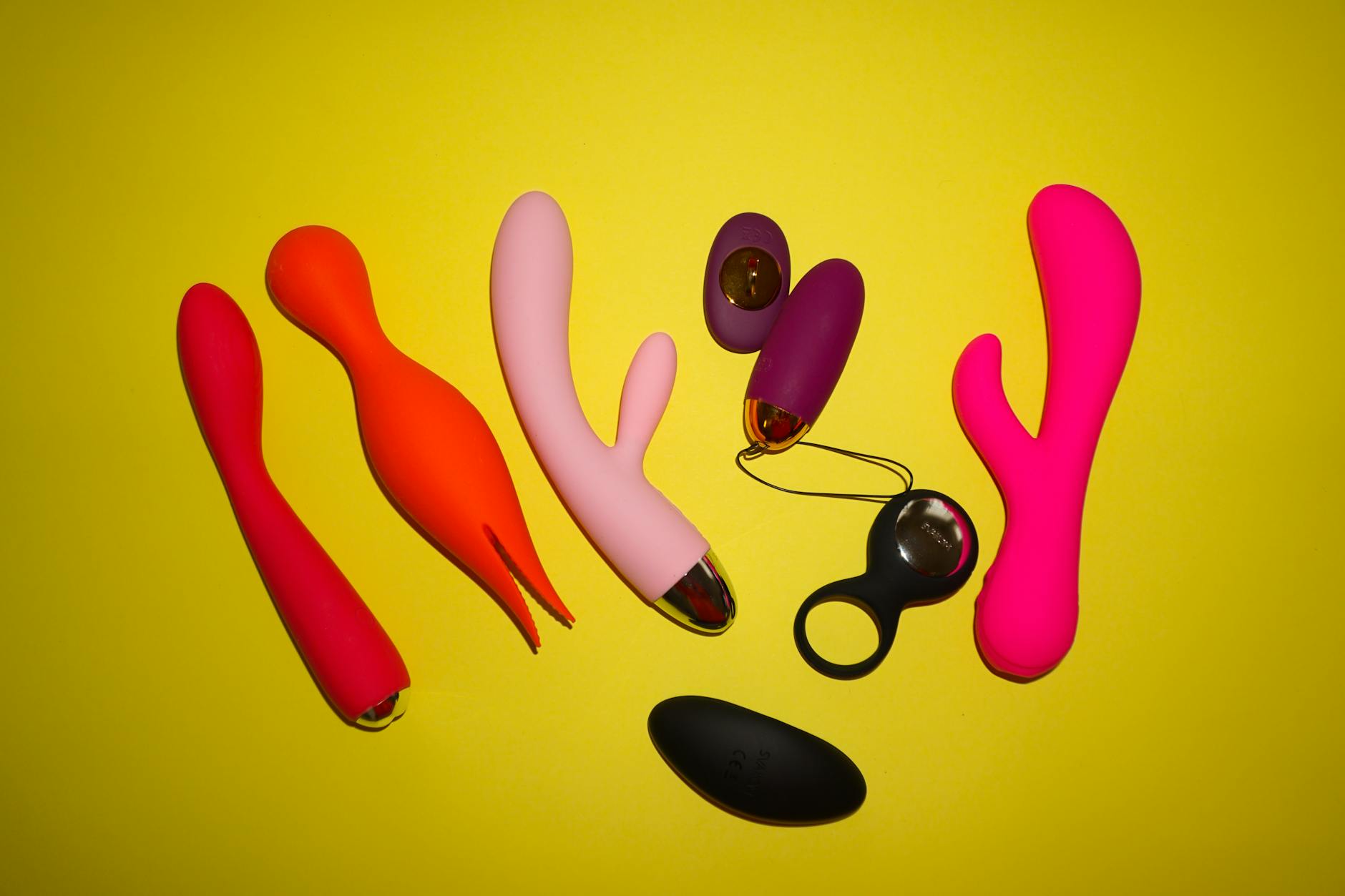
Let's talk about what you might already know from experience
You've probably noticed that some toys feel completely different from others. One buzzes against you like a tiny jackhammer. Another pulls and releases in waves. One feels like almost nothing, and another makes you forget how to breathe. The difference isn't about battery power or price. It's about stimulation type, and your nervous system cares much more than you'd think.
Here's the thing: not all clitoral vibrators are built the same way, and they don't feel the same way either. Understanding why matters because the right tool changes everything.
How your clitoris is wired (and why vibration alone misses the mark)
Let's start with anatomy. The visible clitoris (the glans) is roughly the size of a pearl, and it's packed with around 8,000 nerve endings concentrated in an area smaller than your pinky nail. That's a staggering amount of nerve density. For comparison, the head of a penis has about 4,000.
But here's what most people don't know: those nerves don't all respond the same way. You have fast-twitch fibers and slow-twitch fibers. You have pressure receptors, vibration receptors, and stretch receptors. Different nerve endings fire at different frequencies, and they prefer different types of stimulation.
Traditional vibrators (the standard buzzing kind) deliver repetitive vibration, usually between 50 and 100 hertz. That frequency works for plenty of people, but it doesn't work equally well for everyone. Some nerve fibers tune out after sustained vibration, a phenomenon called "sensory adaptation." Your body literally gets used to the buzz and stops responding as strongly.
Suction vibrators, including lemon clitoral vibrators and similar air-pulse toys, work on a different principle. Instead of rapid back-and-forth movement, they create rhythmic pulses of suction and release. This mimics natural stimulation patterns more closely, which is why they often feel less like repetitive mechanical work and more like... well, something alive.
The neuroscience behind pulsing versus buzzing
When researchers in the Netherlands studied clitoral stimulation patterns, they found something interesting: the brain's pleasure response is more robust to pulsed stimulation than to steady vibration. This isn't just preference. It's measurable in brain imaging.
Pulsed stimulation keeps nerve endings alert because the pattern changes. Your nervous system isn't designed to tune out novelty. Each pulse, each release, registers as a distinct event rather than background noise. Your body stays engaged.
Lemon vibrators and similar suction-based designs tap into this. The pulling and releasing action activates a broader range of mechanoreceptors (the nerve endings that detect physical sensation). Traditional vibration primarily fires one set of receptors repeatedly. Suction fires multiple types in sequence.
Another reason pulsed stimulation wins: it creates what researchers call "temporal summation." That's fancy talk for "the pulses build on each other." Each wave prepares your nervous system for the next one, creating a crescendo effect rather than a plateau. Your pleasure intensifies in a way that steady vibration alone often can't match.
Pressure without the wear
Here's a practical difference: suction toys require less direct pressure than traditional vibrators. A suction toy like the lemon clitoral vibrator uses gentle pulling action rather than intense friction. This matters for several reasons.
First, you can use it longer without numbness or irritation. Traditional vibrators sometimes cause temporary desensitization if you use them intensely for extended periods. The relentless mechanical buzz eventually exhausts your receptors. Suction toys seem to sidestep this because the stimulation pattern varies.
Second, the reduced pressure means less fatigue for your hand or arm if you're using it manually. Holding a buzzing device in place requires tension. A suction toy stays put on its own. That makes a real difference over time.
Third, suction toys feel gentler on sensitive tissue. Some people find traditional vibrators too intense or even slightly uncomfortable. Suction distributes pressure across a slightly larger area and uses a different mechanism entirely, which many find more comfortable to explore.
Why intensity isn't the same as effectiveness
This is crucial, and honestly, most marketing gets it wrong. The strongest vibrator isn't the best vibrator. A toy that buzzes at 200 hertz isn't automatically better than one that pulses at 80.
Your pleasure is determined by what your particular nervous system responds to, not by raw power. Some people prefer intense, focused vibration. Others get numb from it. Some prefer subtle, varied sensations. Others find those frustrating.
Suction vibrators tend to hit that middle ground: they're powerful without being relentless. They're varied without being chaotic. They engage multiple sensory pathways at once.
The lemon sucker approach specifically excels because suction is a natural form of stimulation. Your body has evolutionary wiring that responds to suction. It's not a vibration superimposed on your tissue. It's a pulling sensation, rhythmic and variable, which your nervous system finds inherently satisfying.
Combining suction with vibration (yes, it's a thing)
Here's where it gets interesting: the most effective clitoral vibrators combine both. They pulse but also include subtle vibration within those pulses. This targets fast-twitch and slow-twitch nerve fibers simultaneously.
You might use a device that delivers air-pulse suction as its primary mechanism but adds gentle vibration on specific patterns. That layering creates a much richer sensory experience than either element alone. Your nervous system gets stimulated through multiple channels at once, which creates a more immersive response.
This is why many people find their best results aren't with the most expensive, most famous toy. It's with one that matches their particular neurology. And often, that's a suction-based design like a lemon clitoral vibrator or similar air-pulse toy, especially if traditional vibrators have left them feeling numb or unsatisfied.
The pelvic floor connection
Let's add another layer. Your pelvic floor muscles influence what you feel and how intense sensations are. During arousal, these muscles naturally tense. But they can also tense protectively if stimulation feels overly intense or if you're anxious.
Suction toys seem to cause less involuntary pelvic floor tension than some traditional vibrators. That makes sense: if something feels like a rhythmic wave rather than aggressive buzzing, your body relaxes into it rather than bracing against it. A relaxed pelvic floor means better sensation, easier arousal, and often more intense orgasms.
This is especially important for people with histories of tension, pelvic pain, or anxiety around pleasure. The gentler mechanical input of suction is less likely to trigger a protective response.
When traditional vibration works beautifully (it does, for many)
I want to be clear: this isn't "vibration is bad." For plenty of people, traditional vibrators work perfectly. Some folks find suction too subtle. Others prefer the direct, focused sensation of mechanical vibration. The point is that different tools serve different nervous systems.
If you've had great results with a standard vibrator, that's not wrong. You've simply found what works for your body. But if you've felt underwhelmed, gone numb easily, or found traditional vibration either too intense or not satisfying, suction-based design might be the answer you've been looking for.
The beauty of having multiple tools available is that you're not locked into one sensation type. You can explore, notice what your body responds to, and build a collection that meets different moods and needs.
Finding your stimulation type
Here's my advice: if you're curious about suction stimulation but haven't tried it, start with something designed specifically for suction. A lemon clitoral vibrator or similar air-pulse toy designed as a lemon sucker gives you a true experience of the mechanism rather than a hybrid that's mostly vibration with a gimmicky suction feature.
When you try it, notice the rhythm. Notice whether your pelvic floor relaxes or tenses. Notice whether you find yourself wanting longer sessions or shorter ones. Notice whether orgasms feel different. These observations are your data, and they'll tell you whether suction is your thing or whether you prefer traditional vibration.
You might also find that you want both at different times. Some days, you want the focused intensity of vibration. Other days, the rolling wave of suction feels exactly right. Your preferences aren't fixed. They're contextual and they evolve.
FAQ: Common questions about suction versus vibration
Is suction stimulation only for people with vulvas?
No, but it is most commonly applied to external clitoral stimulation. People of any gender with a clitoris can benefit from air-pulse or suction-based toys. The anatomy is the same regardless of gender identity.
Does suction feel weird at first?
Sometimes, yes. If you've only used traditional vibrators, suction can feel surprising or different. Give it a few minutes. Let your nervous system settle into the rhythm. Most people find it feels natural pretty quickly once they're aroused and relaxed.
Can you use suction toys with a partner?
Absolutely. Many couples love the hands-free or easier-to-hold design of suction toys during partnered play. You can also use them solo while your partner is involved in other ways. It's up to you and your partner's preferences.
Are suction toys quieter than vibrators?
Generally, yes. Air-pulse toys are quieter than traditional vibrators because they don't rely on mechanical buzzing. The sound is more of a soft hum. This can matter if privacy is a concern.
Do suction toys work if you have sensitive tissue?
Often better than traditional vibrators. The pressure is gentler and distributed differently. That said, everyone's sensitivity is different. Start on lower settings and increase gradually. If pain appears, stop and check in with a healthcare provider.
How does suction compare to the complete guide available on Hello Nancy?
For a deeper dive into all vibrator types and how to choose based on your body and preferences, the comprehensive buying guide on Hello Nancy covers multiple design types, intensity ranges, and matching toys to your needs. This article focuses specifically on the neuroscience of why suction works differently. The guide gives you the broader context for shopping smart.
The bottom line
Your nervous system is specific, and it deserves a tool that matches it. Suction vibrators, including lemon clitoral vibrators and air-pulse designs, work differently than traditional vibration because they activate multiple nerve pathways, avoid sensory adaptation, and often feel more intuitively pleasurable.
That doesn't mean traditional vibrators are wrong. It means there are options, and trying different stimulation types is how you figure out what your body genuinely loves. The more you know about how these tools actually work, the easier it is to make choices that feel good.
Your pleasure matters. Your preference matters. Start exploring with curiosity instead of assumption, and you'll find what actually works for you.