Here's what nobody tells you about PCOS and desire
Polycystic ovary syndrome doesn't just mess with your cycle. It scrambles arousal, flattens sensation on some days, cranks it up on others, and leaves you wondering if your body's even yours anymore. Most conversations about PCOS focus on fertility or insulin resistance. The sexual part gets buried or dismissed as "just take the pill."
It's not that simple. And your pleasure absolutely matters.
What PCOS actually does to arousal
PCOS means your ovaries produce excess androgens (think testosterone). This creates a hormonal environment that's fundamentally different from a typical cycle. Instead of one peak around ovulation, your testosterone stays elevated. Instead of a clear progesterone rise after ovulation, you might not ovulate at all. The result: your nervous system gets inconsistent signals.
This affects sensation in three main ways:
1. Unpredictable arousal windows. Without a reliable cycle, you can't predict when you'll feel most responsive. Some days sensation feels sharp. Other days, nothing registers. This isn't in your head. Your clitoral tissue is responding to actual hormonal flux.
2. Tender clitoral tissue. Elevated androgens can make the clitoris hypersensitive. Direct stimulation sometimes feels amazing, sometimes feels raw or sharp. A lemon vibrator's suction-based design sidesteps this problem completely. Suction stimulates without friction, which means less irritation on tender days.
3. Fatigue affects arousal building. PCOS often comes with insulin resistance, which drains energy. When your body's running on empty, your nervous system doesn't have bandwidth for slow arousal. You need a tool that gets to sensation faster.
Why lemon clitoral vibrators work differently with PCOS
Most vibrators rely on vibration frequency and intensity. With PCOS, more power doesn't mean better. What works is precision and adaptability.
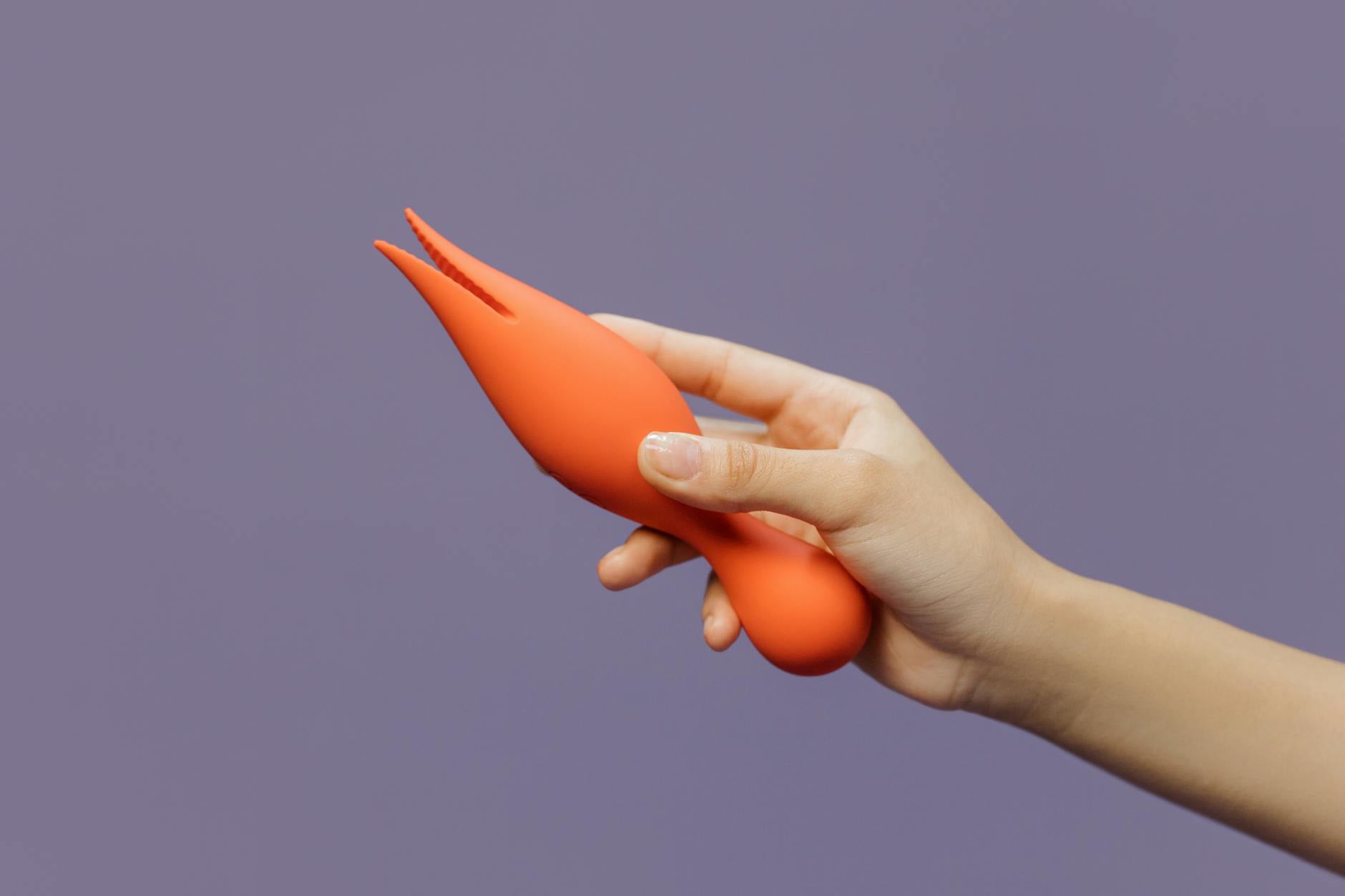
Lem vibrators use pulsing suction technology. This means they're stimulating nerve endings rather than battering tissue. For people with PCOS dealing with hormonal hypersensitivity, that distinction is everything.
You can start at a lower suction intensity and build, rather than starting with vibration that's either "on" or "off." The graduated pressure feels gentler on days when your tissue's angry and more satisfying on days when you want intensity.
Mapping your PCOS rhythm for consistent pleasure
Without a predictable cycle, you need a different strategy. Instead of expecting arousal to peak on day 14, track your actual response patterns.
For two weeks, notice when you feel most receptive to touch. When does sensation feel sharpest. When does even thinking about pleasure make you tired. Don't track ovulation. Track sensation.
You'll likely notice loose patterns even without a clear cycle. Maybe mornings feel better than evenings. Maybe right after you've eaten well, arousal feels easier to access. Maybe certain stress triggers shut everything down.
Once you see your actual rhythm, you can set realistic expectations and choose the right tool for the day. On high-sensitivity days, start with the Lem at level 1. On foggy-energy days, move straight to level 3 to bypass the long warm-up.
The insulin resistance piece (and why it matters)
Most PCOS conversations sidestep this, but it's real. Insulin resistance makes arousal harder because your nervous system is already managing metabolic stress. Elevated cortisol from insulin dysregulation literally suppresses desire signaling.
This isn't something a vibrator fixes. But it's something to know. On days when your blood sugar's been stable and you've moved your body, arousal typically comes easier. On days after high-carb binges or sedentary stretches, expect to work a little harder.
A lemon sucker becomes most valuable on those harder days because it requires less metabolic energy to create sensation. You're not waiting for your nervous system to wake up. You're jumpstarting it.
Using the Lem through PCOS medication changes
If you're on spironolactone, birth control, metformin, or inositol, your hormonal baseline shifts. This usually means your sensation stabilizes compared to untreated PCOS, but the transition period is weird.
When you start a new medication, your body recalibrates over 3-4 weeks. Arousal often gets weird in the middle. You might feel duller than before or unexpectedly sharp. Keep your lemon vibrator nearby during these transitions. The adaptability of suction means you can meet your body where it actually is, not where you expect it to be.
Same rule if you change medications or dosages. Give yourself grace for a few weeks, and use what works on any given day.
Partner communication when PCOS makes pleasure complicated
If you're with a partner, PCOS can look like you've lost interest or become unpredictable. Some days you want sex. Some days touch feels intrusive. Some weeks you're into it, some weeks you're not. A partner might interpret this as rejection when it's actually your nervous system struggling to process hormonal chaos.
The clearest conversation to have is this one: "My PCOS means my arousal doesn't follow a normal pattern. Some days I'm responsive, some days I'm not. Neither means I'm less interested in connection with you. I need us to check in about what I'm actually feeling rather than assuming." That's it.
Then show your partner what helps on different days. Maybe solo play with a lemon clitoral vibrator helps you warm up faster before partnered sex. Maybe on low-sensation days, partnered touch happens without expectation of orgasm. Maybe sometimes you need vibration and sometimes you need stillness.
The Lem works for solo sessions, but it also works beautifully in partnered play. You can use it on yourself while your partner's inside you, or they can use it on you while you focus on them. Suction stimulation feels completely different than friction, which means it reads as new even if you've been with someone for years.
When to check in with a doctor
If your arousal completely tanks or flattens despite medication, see your doctor. Sometimes PCOS gets compounded by thyroid dysfunction, which absolutely tanks desire. Sometimes depression rides alongside PCOS, especially when fertility stuff looms. Sometimes the medication itself is nuking your libido and you need to switch.
A good PCOS-informed provider should ask about sexual function, not assume it's fine. If they don't bring it up, you bring it up. "My arousal has shifted a lot. Is that something we should investigate?" is a completely reasonable question.
The reality of pleasure with PCOS
Your body's messier than a textbook cycle. Your arousal doesn't peak like a bell curve. Some weeks you're wildly responsive, some weeks you're not. That's not broken. That's just PCOS.
What's different from before you knew you had PCOS is now you understand why. And now you have tools that actually meet your body where it is, not where a generic vibrator assumes it should be. A lemon sucker works with your hormonal reality instead of fighting it.
Your pleasure matters even when your cycle doesn't cooperate. Especially then.
People also ask
Does PCOS make orgasms harder to achieve?
For many people with PCOS, yes, but not always for the reason they think. The elevated androgens don't kill your capacity for orgasm. What usually happens is fatigue, stress, and unpredictable arousal make the journey to orgasm longer and less certain. If you're exhausted from managing insulin resistance and dealing with irregular periods, your nervous system has less bandwidth for pleasure. Add depression or anxiety (which ride alongside PCOS in about 40% of cases), and orgasm can feel distant. That's not a sexual dysfunction. That's your nervous system prioritizing survival. A suction-based vibrator helps because it requires less effort and arousal time to trigger sensation.
Can PCOS medication change how vibrators feel?
Absolutely. When you start or change PCOS medication, your tissue sensitivity shifts. Birth control smooths out androgens, which usually means less clitoral hypersensitivity. Spironolactone (an anti-androgen) typically makes tissue less reactive. Metformin rarely changes sensation directly, but better blood sugar control usually means more stable arousal and better blood flow. If your lemon vibrator suddenly feels uncomfortable after starting medication, it's not the tool. It's your tissue adjusting. Give it two weeks, then reassess. You might need a gentler starting intensity for a bit.
Is there a best time of month to use a lemon vibrator with PCOS?
Since PCOS doesn't follow a predictable cycle, "best time of month" doesn't really apply. Instead, track your best times of day or your best times after certain activities. Most people with PCOS report better arousal in the morning after good sleep, or after eating something balanced that keeps blood sugar stable. Physical movement (walking, yoga, even stretching) usually opens arousal more than sitting around. So the best time to use your Lem is probably mid-morning after you've eaten breakfast and taken a walk.
Does PCOS make clitoral vibrators less effective?
Not less effective, just differently effective. The hypersensitivity that comes with elevated androgens means a standard bullet vibrator can feel too intense or actually painful. A lemon sucker bypasses that problem entirely. Suction is a completely different sensation than vibration. Most people with PCOS find they actually feel more, not less, with a suction device because they're not fighting tissue irritation. If you've used traditional vibrators and found them uncomfortable, a clitoral sucker like the Lem is absolutely worth trying.
Can I use lemon vibrators if I'm trying to get pregnant with PCOS?
Yes. Using a lemon vibrator won't interfere with fertility treatment or conception. Some people worry that orgasm or vibrator use will affect pregnancy timing, but the research doesn't support that concern. If you're tracking ovulation (which is harder with PCOS), you can absolutely use a vibrator whenever you want. Pleasure and fertility aren't mutually exclusive.
Does PCOS-related hair growth or weight changes affect vibrator use?
No. Your body is your body. A lemon clitoral vibrator works exactly the same regardless of your weight, hair distribution, or any other physical characteristic. PCOS can absolutely mess with your relationship to your body, especially if you're dealing with unwanted hair growth or weight changes that feel outside your control. That's a real grief worth processing. But it doesn't change how your clitoris responds to suction. You deserve pleasure exactly as you are right now.
The bigger picture
PCOS is a full-body endocrine condition that affects how your nervous system processes arousal. But that doesn't mean your pleasure has to go on pause while you're managing it. It just means you need tools and strategies that work with your actual body, not against it. A lemon vibrator does exactly that. Start low, pay attention to what changes day to day, and give yourself permission to want pleasure even when everything else feels unpredictable.
If you're navigating PCOS and want to explore what works for your body, your partner, or your solo practice, I'm here to help. Let's figure out what actually serves you.
References
Andradre, R. et al. (2023). Sexual dysfunction and quality of life in women with polycystic ovary syndrome. Fertility and Sterility, 119(3), 452-461.
Moghetti, P. et al. (2024). Diagnosis and treatment of polycystic ovary syndrome. The Lancet Diabetes & Endocrinology, 12(4), 312-328.
Teede, H. J., et al. (2023). Recommendations from the international evidence-based guideline for PCOS assessment and management. Human Reproduction Update, 29(2), 119-140.
Wilson, E. et al. (2022). The impact of insulin resistance on sexual function in PCOS. Journal of Clinical Endocrinology & Metabolism, 107(9), 2591-2602.