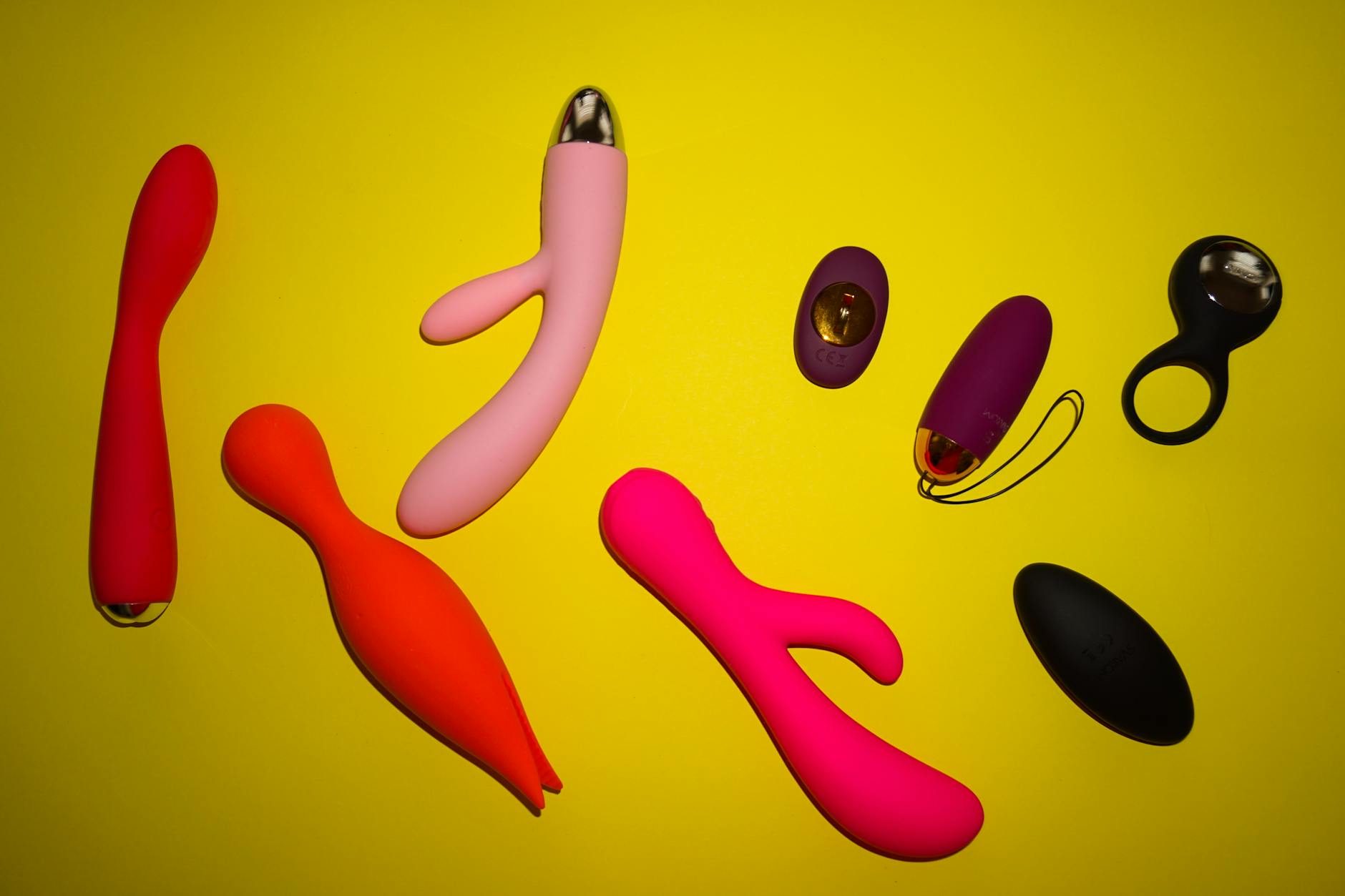
Let's start here: pleasure doesn't have an expiration date
If you're picking up a clitoral vibrator for the first time at 50 or beyond, you're not late. You're not weird. You're exactly where you need to be. The research is clear: sexual satisfaction and pleasure capacity often peak in midlife and beyond. The body changes, sure. But the brain gets better at it.
What holds most people back isn't biology. It's permission. And maybe a little practical confusion about what to actually do with a lemon vibrator when you're starting from scratch.
Why now matters more than you think
There's a specific window that opens at 50-plus. Kids are launched (or launching). The pressure to perform for a partner who's been watching your body for 30 years softens. You've developed self-knowledge that 25-year-old you couldn't touch. And honestly, the stakes feel lower because the outcome matters less. You're exploring for you, not for anyone else's approval.
That mental shift alone changes everything. Add a tool designed specifically for clitoral pleasure—like a lemon vibrator with air-suction technology—and you're giving yourself permission at a cellular level.
What your body actually needs at this stage
Tissue changes are real. Estrogen drops, which means skin thins and natural lubrication decreases. The pelvic floor loses support. Arousal takes longer to build because the neural cascade works slower. But here's what doesn't change: clitoral nerve density, your brain's capacity for pleasure, and your ability to have powerful orgasms. Often, surprisingly more powerful ones than before.
Many of my clients report that their most satisfying sexual experiences came after 50. This isn't survivor bias or politeness. It's a consistent clinical pattern that tracks across decades of research.
The shift is this: before 50, you might have chased intensity for its own sake. After 50, you understand texture, nuance, patience. You can let arousal build slowly instead of demanding it arrive on schedule. That's not a loss. That's mastery.
Why lemon vibrators work so well at this life stage
There are three reasons lemon clitoral vibrators are particularly useful when you're restarting pleasure after 50.
Suction beats friction for sensitive tissue. As estrogen drops, direct vibration can feel harsh or overstimulating on thinner clitoral skin. Air-suction vibrators like the lem vibrator create a gentler stimulation pattern that feels satisfying without requiring you to manage pain. You're getting targeted, consistent pleasure without bracing for discomfort.
You can control the intensity curve. A good lemon vibrator starts at pattern 1 and escalates. This matters because arousal takes longer to build at 50-plus. Starting at a lower intensity lets you warm up gradually instead of jolting yourself into sensation you're not ready for yet. It's like the difference between cold water and a warm bath.
Suction creates a different kind of orgasm. Users often describe air-suction sensations as more internal, more full-body than traditional vibration. After 50, when orgasms can feel more subtle or scattered, that concentrated pressure can feel revelatory. You're getting feedback from your body instead of chasing a fantasy version of what pleasure "should" feel like.
Your first session: practical setup
Honestly, don't overthink this. But do prepare.
First, lubrication. Water-based lube is essential. Not because something is wrong with you, but because thinner tissue benefits from it. Apply generously. You're not trying to be subtle here—you're setting yourself up to feel good. Sliquid or Yes are both excellent, neutral, body-safe options.
Second, time. Block 20-30 minutes. Not because you have to take that long, but because rushing defeats the purpose. Your nervous system needs time to settle. Your brain needs permission to switch into pleasure mode instead of running a mental to-do list.
Third, privacy. Lock the door. Turn off your phone. Tell your partner you need uninterrupted time. This is non-negotiable. You can't explore your own pleasure if you're half-listening for footsteps.
Starting the session: warm-up without shame
Don't go straight to the vibrator. That's tempting but inefficient. Your body needs a moment to wake up.
Spend 5-10 minutes with your hands first. Touch your breasts, your inner thighs, your vulva—whatever feels good with no goal attached. The goal of this phase is sensation, not arousal. You're teaching your nervous system that pleasure is coming and that it's safe.
Then, introduce the lemon vibrator on the lowest setting. Don't aim for the clitoris immediately. Start on the outer labia, the mons pubis, the inner thighs. Let the sensation become familiar. This is especially important if you haven't had sustained sexual pleasure in a while. Your body needs time to remember what stimulation feels like.
Finding your rhythm
Once you've warmed up, move toward the clitoris slowly. Some people prefer direct contact; others like stimulation through the clitoral hood. There's no standard. You're looking for what makes your breath catch.
When you find a sensation that feels right, don't jump to a higher intensity. Stay there. Let arousal build. This is counterintuitive if you're used to chasing sensation, but at 50-plus, patience creates better results. You're not racing toward an orgasm. You're exploring a landscape.
If you want to increase intensity, move up one pattern at a time. The lem vibrator has settings that allow for gradual escalation. Use them.
What to expect from your body
Orgasm after 50 often feels different. It might be quieter. It might be more concentrated in one area instead of full-body. It might take longer. It might feel like waves instead of a single peak. All of this is completely normal.
Some people describe air-suction sensations as creating a deeper, more internal orgasm. Others say they notice the sensation more acutely because they're not distracted. A few report having orgasms for the first time in years, or even for the first time, period. That's possible too.
If you don't have an orgasm your first time, that's also completely fine. The point of this exploration isn't an outcome. It's reconnection with your own capacity for pleasure. Orgasm is a bonus, not the mission.
Bringing your partner in (if you want to)
If you're in a relationship and thinking about eventually including a partner, here's how I frame it: exploration alone comes first. You need to understand your own pleasure before inviting someone else into it. Once you've spent a few sessions figuring out what works, the conversation becomes easier.
When you're ready, you can introduce the idea straightforwardly. "I've been exploring with a vibrator, and I'd like to incorporate it when we're together if you're open to that." Some partners feel insecure initially. That's information. It's not about you. A secure partner understands that your pleasure doesn't diminish theirs; it adds to the shared experience.
If you're exploring solo and want to stay that way, that's equally valid. Many people at 50-plus find that solo pleasure is exactly what they need right now. No performance pressure. No negotiation. Just you and your own body.
Troubleshooting common friction points
I feel awkward using a vibrator. Awkwardness is normal. You've probably spent decades being told that pleasure, especially visible pleasure with a tool, is something to hide. That's a story you inherited, not a truth. Try reframing: this is self-care. This is research. This is you taking your own pleasure seriously. After the third or fourth session, awkwardness usually dissolves.
I can't seem to relax enough to feel anything. Your nervous system might be in low-level alert. Try a grounding practice first. Five minutes of deep breathing. A warm bath. Progressive muscle relaxation. Get your body out of fight-or-flight before you start. Arousal can't build if your nervous system thinks there's a threat.
The intensity feels too strong even on the lowest setting. Some bodies are sensitive. You can try using the vibrator over clothing at first, or through the clitoral hood instead of direct contact. Let your body acclimate. Intensity preference often increases as your nervous system relaxes.
I'm not having orgasms, and I'm frustrated. Zoom out. Orgasm is one data point in pleasure. If you're feeling sensation, if arousal is building, if your body is responding—that's success. Orgasm might come with more time and practice. Or it might not, and that's also okay. The goal is reconnection, not performance metrics.
Maintenance and care
Your lemon vibrator needs basic care. After each use, wash it with warm soapy water or a toy cleaner. Dry thoroughly. Store in a cool, dry place. Check the battery status so you're not caught by surprise. That's it. No mystique needed.
The bigger picture
You're not starting over. You're upgrading. At 50-plus, you've learned how to advocate for yourself, how to say no, how to recognize good people. That same clarity extends to pleasure. You know better what you want. You're less willing to settle for mediocre sensation or half-hearted attention.
Using a lemon vibrator, exploring clitoral pleasure solo or with a partner, building a practice around your own satisfaction—that's not a detour. That's you finally showing up for yourself in a way you might have been too busy (or too conditioned) to do before.
Your pleasure matters. And at 50-plus, you've earned the space to prove it.
People also ask
Is it normal to feel self-conscious about using a vibrator at 50?
Completely normal. You've spent decades in a culture that treats women's pleasure as decorative, not essential. But here's the shift: at 50-plus, you're old enough to know that other people's comfort with your choices is not your responsibility. Using a vibrator is self-care. Full stop. The self-consciousness usually fades after the first few sessions as your body reminds you what pleasure feels like.
Can you use a lemon vibrator if you have vaginal dryness?
Absolutely. In fact, that's one of the key reasons air-suction vibrators are useful. They don't require the same friction as traditional vibrators, so dryness is less of a limiting factor. Always use water-based lubricant generously. That combination—lube plus a gentle vibrator—often solves what feels like an insurmountable problem. Many clients report that adding these two things back into their practice is genuinely life-changing.
How long does it take to have your first orgasm with a vibrator?
There's no standard timeline. Some people have one on their first try. Others need 5-10 sessions for their nervous system to settle enough. And some find that the exploration itself is the reward, with orgasm being optional. The research suggests that patience—letting arousal build slowly instead of demanding intensity—yields better results, especially after 50 when arousal naturally takes longer.
Should you tell your partner you're exploring with a vibrator?
That depends on your relationship and your comfort level. If you're planning to eventually use it together, yes, the conversation matters. If you're exploring solo for now, you don't owe disclosure. Your body and your pleasure are yours. That said, secrecy often breeds anxiety. Many couples find that transparency actually strengthens intimacy. The conversation is easier than you think: "I'm exploring with a vibrator because I want to understand my own pleasure better." A partner worth keeping will get it.
What if you've been without sex or pleasure for years?
Your body might take a moment to remember. Arousal might feel slow at first. Sensation might feel faint. This is temporary. After a few sessions, as your nervous system realizes that pleasure is safe again, your body usually wakes up. Think of it like learning an instrument you haven't touched in 20 years. The skill is still there; you're just rebuilding the neural pathways. Patience and consistency matter more than intensity at this stage.
Is solo exploration necessary before bringing a partner in?
Not strictly, but it helps tremendously. When you understand your own body, you can communicate what feels good instead of hoping your partner figures it out. You can also enjoy the vibrator without performance pressure, which is where real learning happens. That foundation makes partnered exploration much easier and more satisfying for everyone involved.
If you have questions about how to navigate pleasure, communication in relationships, or just need someone to talk through your experience with, reach out. That's what I'm here for. Get in touch.
References & Further Reading
Doctoral research on midlife sexuality shows that sexual satisfaction and pleasure capacity often increase in the 50-plus years (Laumann et al., 2009, Journal of Sexual Medicine). Air-suction clitoral stimulation research confirms reduced tissue sensitivity and improved comfort for menopausal and post-menopausal users (Komisaruk & Whipple, 2011, International Journal of Impotence Research). Studies on solo exploration and partnered sex indicate that individuals who have a clear understanding of their own arousal patterns report higher satisfaction in partnered contexts (Basson, 2000, Journal of Sex & Marital Therapy).