
Let's start with the tension nobody names
One partner is excited about the Lem. The other is curious, skeptical, or quietly nervous. You want to share something meaningful, but "So I want to try this vibrator" lands differently when one of you is already comfortable with toys and the other sees it as a leap.
The gap between experience levels isn't actually the problem. How you frame the introduction is. Most couples get stuck because they're trying to minimize the gap instead of acknowledging it exists. That's backward. The more honest you are about where each person is coming from, the easier the actual experience becomes.
Why experience gaps happen (and why they matter)
Think about how most people learn about their own pleasure. It's usually through solo exploration. People who've masturbated with toys have a baseline comfort with vibration, suction, sensation intensity, and the feeling of a foreign object being part of their pleasure. People who haven't haven't had that private runway.
That's not a judgment. It's just information. And it means the experienced partner needs to do something counterintuitive: slow down.
When you're already comfortable with a Lem clitoral vibrator or other toys, your instinct might be to show your partner how "good" it is by diving in. That's actually the move that creates hesitation. Instead, the experienced partner's job is to be the calm guide, not the enthusiast evangelist.
How to have the setup conversation
Don't frame it as "I want to use a vibrator." Frame it as "I want us to explore something together, and I need to tell you a bit about where I'm coming from first."
Then be specific. Say something like: "I've used toys before when I'm alone, and it helps me understand what I like. I'm not introducing this because something's wrong. I'm introducing it because I want to share that with you, and I think we could both enjoy it. I know this might feel new or intense. That's completely normal. We can go as slow as you need."
That does three things: it normalizes your prior experience, it removes the implication that the newer partner is the problem, and it explicitly gives permission to move slowly.
Then ask. Actually ask: "How do you feel about this? What would make you more comfortable?"
Listen to the actual answer. If they say "I'm nervous about feeling replaced by the toy," that's a different conversation than "I'm worried it will be uncomfortable." Most couples skip this step and end up trying to solve the wrong problem.
The first session when experience levels differ
Here's what I recommend to almost every couple in this situation:
Start solo, then invite. The less experienced partner should try the Lem alone first, without the stakes of performance or partner observation. Give them 15 minutes in private. This isn't for them to have an orgasm. It's for them to learn what the vibration feels like, how to hold it, what pattern feels interesting. Remove the audience. Remove the pressure.
Then narrate what happened. After they've tried it, ask "What did that feel like?" Listen to whatever they say. They might say it was intense, confusing, pleasurable, awkward, or surprisingly nice. None of those are wrong. Your job is to acknowledge it, not fix it.
Introduce it together very slowly. The next time you're intimate, the less experienced partner can control when and how it gets involved. They hold it. They decide the intensity. They decide if it touches their body or stays nearby. The experienced partner doesn't grab it, doesn't suggest a "better" angle, doesn't demonstrate.
This takes the pressure off both of you. The less experienced partner gets to set the pace. The experienced partner gets to see their partner discover something without forcing the outcome.
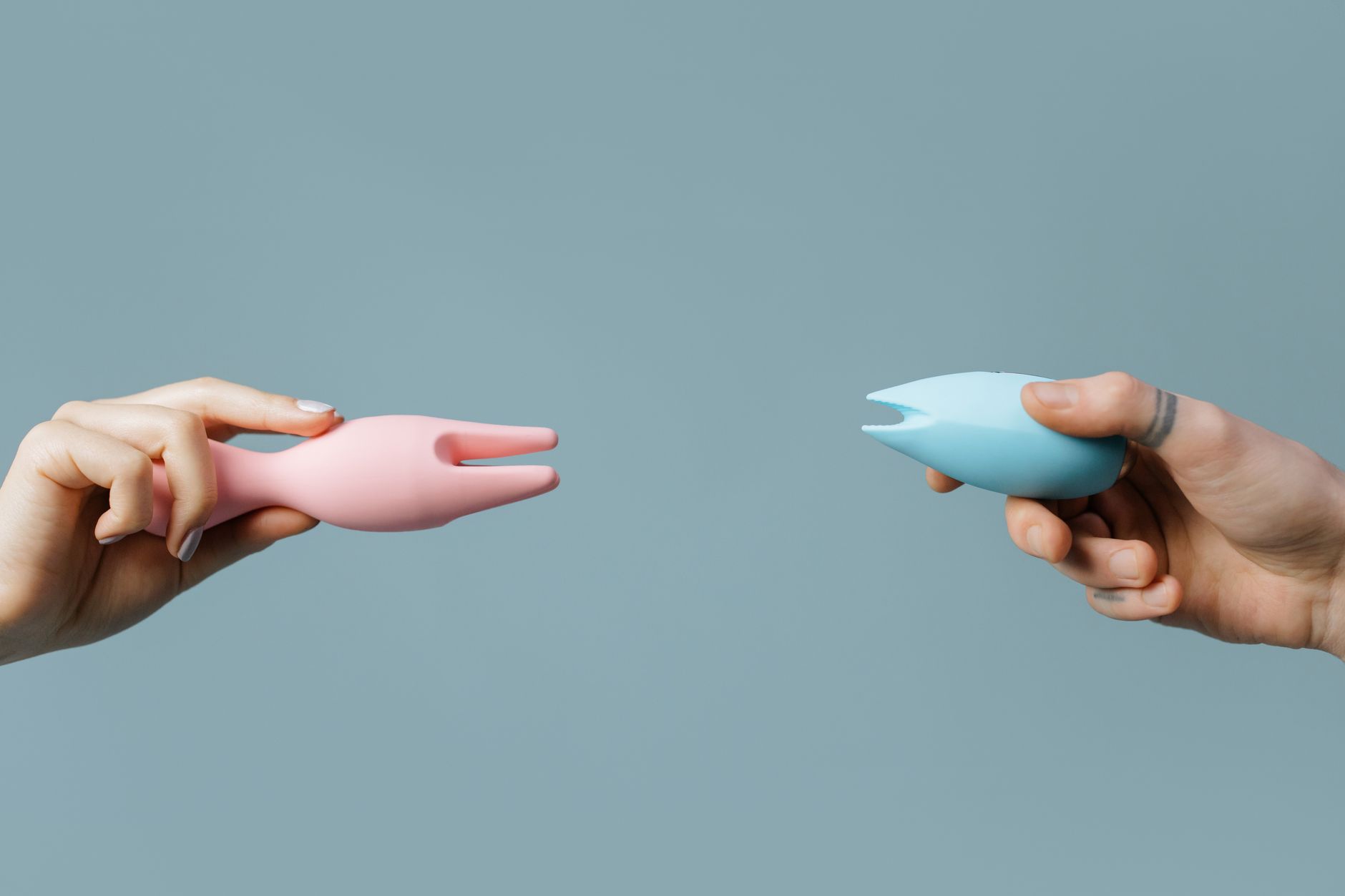
Photo by cottonbro studio on Pexels
The emotional stuff that's actually harder than the physical stuff
Here's what comes up a lot: the less experienced partner feels self-conscious. They think the toy means they're "not enough," or they worry they'll look weird holding it, or they feel embarrassed that the other person has "done this before" and they haven't.
That's worth addressing directly. Say it out loud: "I know this might feel unfamiliar. That doesn't make you behind or unprepared. You're just new to this, and that's fine. Lots of people haven't used toys yet. There's no "normal" amount of experience to have."
The experienced partner's role here is to be genuinely unconcerned. Not fake-unconcerned. Actually unconcerned. If you're watching your partner use a Lem for the first time and you're thinking "this is hot," that's fine. But don't make it about your reaction. Make it about their discovery.
When a partner feels watched or evaluated, they can't relax. Relaxation is when the magic happens.
What to do if one person wants more intensity than the other
This is different from the experience-level problem, but it overlaps sometimes. One partner might like The Lem on pattern 5 with direct contact. The other might prefer pattern 1 with indirect pressure. Both are normal.
The solution is not compromise (boring, resentful). The solution is: each person gets their version. You might use it together but in different ways. You might take turns having solo time with your own preferences. You might use different toys entirely. The Lem works well when one partner loves suction-based stimulation, but for the other partner's preference, a different clitoral vibrator might feel better.
Stop trying to like the same thing in the same way. That's not how pleasure works.
When the less experienced partner still feels hesitant
Some people need more time. Some people try it once and decide it's not for them. Both are completely fine.
If hesitation persists, check in on what's actually happening. Is it physical discomfort? Is it emotional shame? Is it a mismatch between what they imagined and what they experienced? Is it pressure from their partner that they're not saying out loud?
Often, the block isn't the toy. It's trust. If the less experienced partner doesn't trust that their partner will actually listen to "not right now," they won't relax enough to enjoy anything.
So make the agreement explicit: "If you want to stop, we stop. No questions, no guilt, no trying again that day." Then honor it. Actually stop. Actually don't bring it up later that week with a frustrated tone. Actually let them lead the next invitation.
Trust rebuild takes time. Worth it, though.
FAQ: Partners with Different Experience Levels
How long should we wait before introducing a toy if one partner hasn't used one before?
There's no timeline. Some couples do it early. Some wait months or years. What matters is that both people want it, not that one person is pushing and the other is reluctantly agreeing. If one person hasn't come up with the idea themselves, they're probably not ready yet. Wait for actual interest, not obligated consent.
Should the less experienced partner try it alone first, or should we do it together?
Alone first, then together. Solo time removes the performance element. They get to learn what their body feels like with the toy without worrying about how they look, how long it's taking, or what their partner thinks. That private runway usually translates to more comfort when the partner is involved.
What if my partner says no to toys but I'm really interested in using one?
That's information. You can use toys solo without your partner's participation. That's completely normal. You might also ask what specifically they're saying no to. Is it vibrators in general? Is it a Lemon clitoral vibrator specifically? Is it something about the idea of toys in partnered sex? Different blocks need different conversations.
Can we use lemon sexual toys if one of us has had lots of partners and the other hasn't?
Yes. Experience count and experience with toys are different things. Someone might have had 15 partners and never tried a vibrator. Someone else might have had one partner and be really comfortable with toys. Don't conflate the two. The conversation is about toys, not history.
How do I introduce this if my partner gets jealous easily?
Direct conversation first. "I want to explore this with you because I want to share it with you. When I suggest something new, that doesn't mean I'm looking elsewhere. I'm looking at you." Then follow through. Use the toy in partnered contexts. Let your partner control when it gets involved. Make it collaborative, not something you're doing to them or without them.
What if we try it and I hate it but my partner loves it?
You don't have to use it. Your partner can enjoy it solo. You can enjoy partnered sex without it. These things don't have to be synchronized. If you want to make your partner happy, watching them feel good is usually enough. You don't have to participate in every element of someone else's pleasure.
The real point
Experience gaps exist. They're not failures. They're just starting points. The couples who move through them smoothly are the ones who name them, talk about them, and then get genuinely curious about what their partner actually feels instead of what they're supposed to feel.
You don't need matching résumés in pleasure. You need honesty, patience, and willingness to go slow. Start there, and when you're ready to explore different positions or patterns, you'll know.
If you have questions about navigating this conversation or want personalized guidance, reach out to us. We're here to help.