Let's name what's really happening
You're interested in using The Lem. You've probably researched it. Maybe you've even added it to your cart. But there's a voice that says: this is embarrassing, you shouldn't want this, people will judge you, you're being selfish, this is frivolous. That voice is so loud it's keeping you from clicking buy.
That's not conscience. That's conditioning. And it's costing you pleasure you absolutely deserve.
Here's what I see clinically: self-consciousness about pleasure is one of the most common barriers people face, and it's almost never rooted in anything rational. It's rooted in messages you absorbed about bodies, gender, desire, and shame. The good news? Those messages can be interrupted. Deliberately. Using actual tools.
Where self-consciousness about pleasure actually comes from
It's rarely one thing. It's usually a layering of stuff:
Cultural messaging. Women, especially, are taught that pleasure is something you receive, not something you orchestrate. Wanting something explicitly for yourself feels greedy. Asking for it feels aggressive. Prioritizing it feels wrong.
Family scripts. If sexuality wasn't discussed, or was discussed only in terms of danger or shame, your nervous system learned early that this territory is unsafe. Safe doesn't necessarily mean rational. It just means familiar.
Relationship patterns. If you've spent years calibrating your wants around a partner's comfort, or if past partners responded to your desire with coldness or criticism, you've learned to keep it small. Quiet. Invisible.
Body image. Self-consciousness about pleasure is often tangled up with self-consciousness about the body itself. You might feel weird touching yourself, or you might feel weird being touched. A vibrator can feel like direct evidence of something you're already ashamed of.
None of this means you're broken. It means you've absorbed a specific cultural instruction: your pleasure doesn't matter as much as other people's comfort. That instruction is wrong, and your nervous system needs new data.
Why shame specifically kills arousal
Your nervous system can't be in two places at once. It can't be in rest-and-digest mode (where arousal lives) and in threat-detection mode (where shame lives) simultaneously. When you're using a lemon clitoral vibrator while your brain is narrating a story about how weird or wrong this is, you're pulling your own nervous system out of the game.
It's not that the vibrator doesn't work. It's that you're not letting yourself receive the stimulus. Your attention is split between sensation and self-judgment. Arousal needs your whole attention.
This is why willpower doesn't work here. You can't white-knuckle your way past shame. You have to change the information your nervous system is receiving.
The three-phase interruption
I use this framework with clients who are rebuilding a relationship with their own pleasure. It works whether you're using a clitoral vibrator like The Lem or anything else.
Phase 1: Separate the vibrator from the shame.
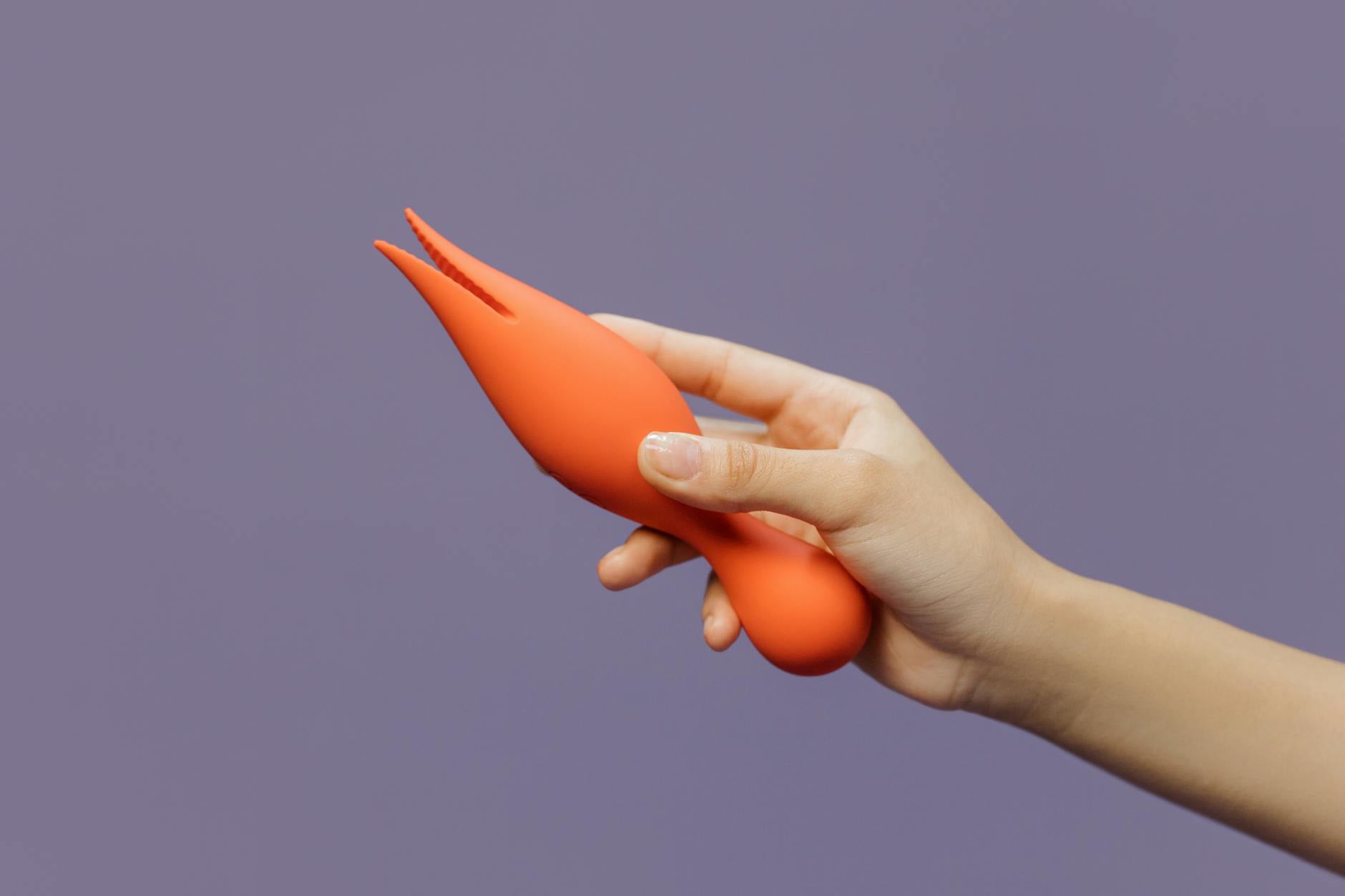
Don't start by using it. Start by looking at it. Hold it. Charge it. Get familiar with the object itself, divorced from what it "means." You might feel ridiculous. That's actually the point. Ridiculous means you're stepping outside the narrative. When you pick up The Lem and just... hold it... without using it, you're sending your nervous system a low-stakes message: this object is safe. This is just a thing.
Do this for a few days. It sounds small. It's not. You're rewiring the automatic association between the object and shame.
Phase 2: Use it in a non-sexual context.
Use The Lem while you're doing something ordinary. Lying in bed reading. In the bath. In a chair watching a show. Not trying to aroused. Not trying to orgasm. Just letting your body get used to the sensation while your brain is occupied with something else.
This is where a lot of people get stuck because they think "using a vibrator" means trying to have an orgasm. It doesn't. Pleasure exists on a spectrum. Sensation exists. Curiosity exists. You don't need a goal. This phase is specifically about decoupling the vibrator from performance pressure.
Most people report that after a few sessions of this, the shame starts to soften. Not disappear. Soften. Your body learns: this feels fine. Nothing bad happens. I'm still me.
Phase 3: Introduce arousal incrementally.
Once the vibrator feels neutral (or even pleasant) in a low-stakes context, you can bring it into a sexual one. But "sexual context" doesn't mean orgasm-or-nothing. It might mean: taking 20 minutes to just notice what feels good. Not trying to come. Not performing. Just exploring.
The shame narrative will probably show up again. When it does, don't fight it. Name it. "There's that voice saying I'm weird." And then: "I'm doing this anyway." That's not overriding shame through force. That's acknowledging it while making a different choice. Your nervous system learns the difference.
What self-consciousness sounds like in your body
Sometimes shame is loud ("This is wrong"). Sometimes it's quiet (a tightness in your chest, shallow breathing, a vague sense of wrongness you can't name). Both need attention.
If you notice your muscles getting tighter when you start using a lemon sexual toy, pause. Check in with what your body needs. Maybe it's a few minutes to breathe. Maybe it's slowing down. Maybe it's stopping and trying again tomorrow.
This isn't failure. This is information. Your nervous system is talking. Listen to it, and then decide if you want to keep going anyway.
When self-consciousness is entangled with a relationship
If you have a partner and you feel self-conscious about using The Lem, the conversation matters more than the vibrator.
Some partners respond to self-pleasure with insecurity ("Why do you need that if you have me?"). Some respond with curiosity ("Can I be involved?"). Some respond with indifference ("That's your thing"). The response you get will either reinforce or interrupt the shame.
You don't need permission. But you might need clarity. One conversation I recommend: separate the two topics. Don't mix "I want to use a vibrator" with "I want more sex" or "I'm not satisfied." Those are different conversations and they muddy each other.
You could say: "I'm exploring what feels good for my own pleasure. This isn't about anything being wrong with us. I'd like your support, but I'm doing this regardless." That's different from asking permission. That's informing and setting a boundary.
If your partner responds poorly, that's useful data about what you're working with. And it might mean you need <a href="/blog/how-to-use-lemon-vibrators-with-partners-who-have-body-image-anxiety">support navigating a partner's insecurity</a>, or it might mean you need to figure out what your own pleasure is worth to you, independent of their comfort.
The story you're allowed to tell yourself
Self-consciousness thrives in vagueness. It lives in the gap between what you want and what you think you're allowed to want. Closing that gap means getting specific about your own narrative.
Instead of: "I feel weird about vibrators." Try: "I was taught that my pleasure should be secondary. I'm unlearning that."
Instead of: "Using a vibrator seems selfish." Try: "I deserve to feel good in my own body. Taking care of my pleasure is taking care of myself."
These aren't affirmations. They're facts. And your nervous system can tell the difference between a platitude and something true. When you can name what's actually happening (I was taught shame, I'm choosing to rewire it), your system starts to believe it.
When you need more support
Sometimes self-consciousness about pleasure is layered with trauma, or it's tangled up with depression or anxiety. A vibrator isn't therapy. If you're struggling with sexual shame that's affecting your life, talking to a therapist who specializes in sex-positive work is worth doing. Not because there's anything wrong with you. Because you deserve support.
That said, using a lemon clitoral vibrator while you're in therapy often accelerates the work. Your body gets to experience directly: my pleasure is safe, I am safe, this feels good. That's powerful data for your nervous system to work with.
FAQ
What if I feel self-conscious even when I'm alone?
That's common because shame isn't about other people's judgment. It's about internalized messages. You're not really worried they'll know. You're uncomfortable with the fact that you want it. The three-phase interruption still works. You might move through it more slowly, or you might need to pair it with some internal work around what you were taught about bodies and desire. But the body learns through experience. Repeated, low-pressure exposure to the sensation helps interrupt the automatic shame response.
Is it normal to feel guilt after using a lemon vibrator?
Yes. Guilt and shame are different. Shame is: something is wrong with me. Guilt is: I did something wrong. If you feel guilt after pleasure, you can sit with it, ask what message it's protecting, and then decide if that message is one you want to keep. Usually the answer is no. You're allowed to want and receive pleasure. Full stop.
Does self-consciousness go away completely?
Not always, and that's okay. The goal isn't to feel zero discomfort. The goal is for pleasure to be bigger than the discomfort. Over time, most people report that the voice gets quieter, and the sensation gets louder. That's enough.
Can using The Lem help me feel more confident in my body?
Yes, but not directly. What changes is the relationship between you and sensation. When your body becomes a source of information and pleasure instead of just a thing to be seen or judged, confidence shifts. You start inhabiting it differently. You move through the world differently. That translates into everything.
What if my partner wants to be involved but I'm self-conscious?
Start alone. Get comfortable with the sensation and the object without an audience. Once you've done that work, you can decide what you want to invite a partner into. There's no rule that says a vibrator has to be a shared experience. Some people prefer solo play. Some want to incorporate it with a partner. Some do both. Your comfort comes first.
How do I know if my self-consciousness is normal or if it's something deeper?
Normal shame about pleasure is responsive. You use the phases, you do some internal work, you get more comfortable. Deeper stuff (trauma, significant anxiety, depression) usually doesn't budge as much from simple exposure. If you've tried the three-phase approach and nothing is shifting after a few weeks, talking to a therapist is the right move. Not because you're broken. Because you deserve support in doing this work.
The bottom line
Your pleasure isn't a luxury. It's not frivolous. It's not selfish. It's your birthright. The Lem is a tool for accessing that. But the real work happens between your ears. You have to decide that you're worth it. That your body deserves to feel good. That wanting something explicitly for yourself is okay.
Once you decide that, the vibrator just makes it easier. If you're still working through the decision, <a href="/contact">get in touch</a>. We can talk through what's coming up.
You're not weird for wanting this. You're human.