Let's talk about solo play
Here's the thing nobody tells you: solo pleasure with lemon vibrators is a completely different skill than partnered sex. The pressure is off, the pace is yours, and there's no one else's comfort to manage. That should feel liberating. For some, it does. For others, the silence is weird. Both are normal.
I work with clients who haven't had solo orgasms in decades. Sometimes they've never had one. The blocks aren't physical. They're usually permission-based. You're supposed to want sex with someone else. You're supposed to be wanted. Solo pleasure gets treated like consolation sex. It's not. It's foundational.
Why solo play with lemon vibrators matters
When you explore pleasure alone, you're learning your own response pattern without anyone else's feedback loop in the room. That changes everything.
With a partner, you're managing their comfort, their pace, their timing. You're also, whether you admit it or not, performing pleasure that looks like what you think they want to see. Solo play removes that audience. You learn what actually feels good to you. Not what you think should feel good. Not what works for someone else. What works for you.
Lemon vibrators are particularly good for this because they work through suction rather than direct vibration. That means you can use them for longer sessions without the sensory fatigue that comes with traditional vibrators. The Lem, for instance, lets you adjust intensity through five pattern levels, which is useful when you're learning your own response.
Building a solo routine
Three things shift when you move from occasional to routine solo pleasure.
First, consistency matters more than intensity. Many people go zero to 100 with a vibrator, use it once, then forget about it for months. That doesn't train your nervous system. What does is regularity. Once or twice a week is enough to establish a baseline. You'll learn which patterns work best for you, which times of day your body responds better, and whether your arousal changes across your cycle.
Second, context is everything. You need actual privacy, not just being alone. If you're listening for footsteps or worried about interruption, your body won't let go. Close the door. Put your phone on silent. Set a timer if you need to tell your brain when you'll be done. Permission structures matter more when there's no partner to externally validate what you're doing.
Third, patience is the actual tool. Solo arousal takes longer than you think, especially if you're used to partnered sex where the other person is doing some of the work. Budget 20 to 30 minutes minimum. Spend the first 10 to 15 just with your own touch. Fantasize. Read something that works for you. Let your body warm up before the lemon vibrator comes in.
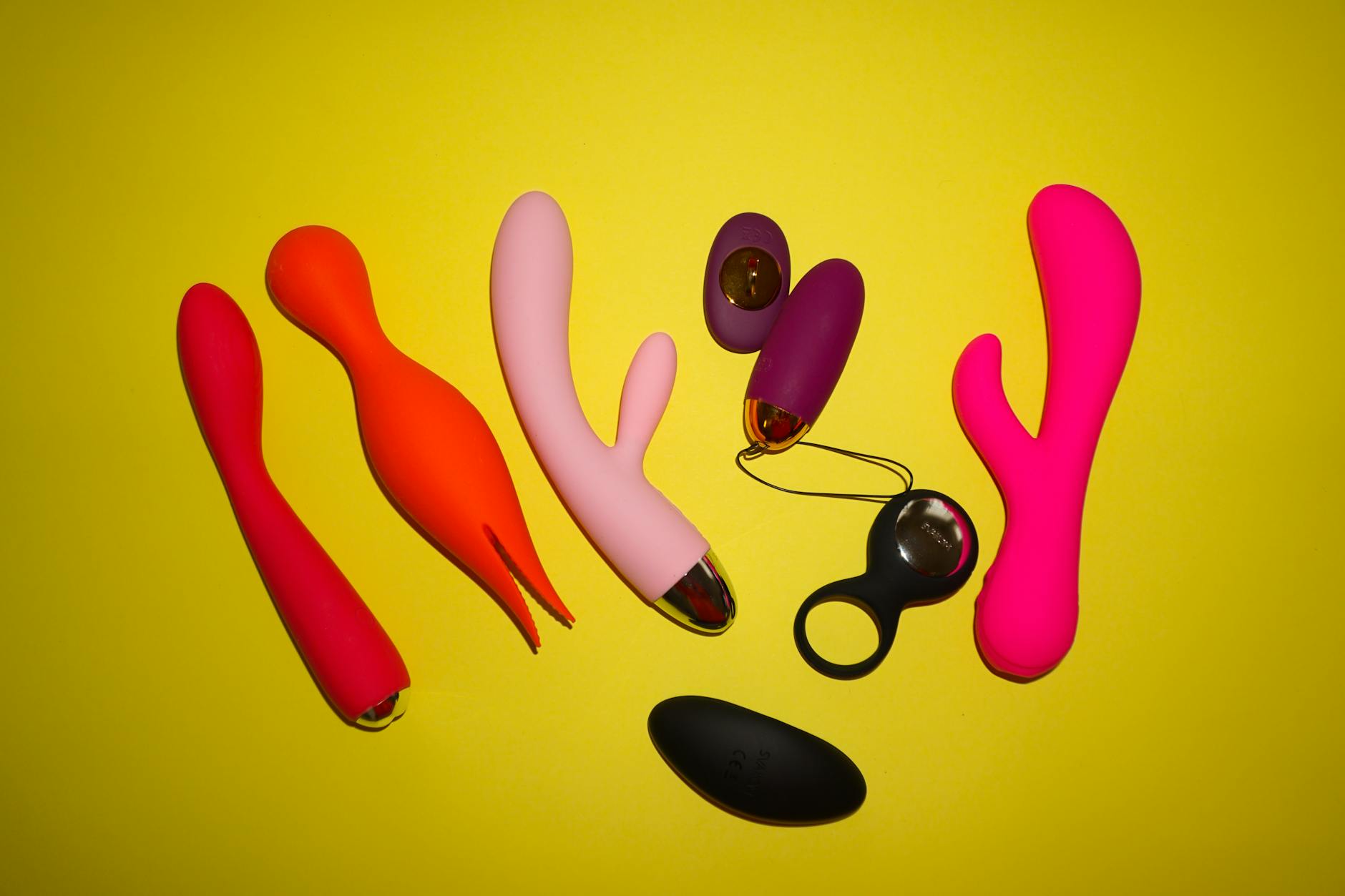
Photo by FounderTips on Pexels
The technical side
Using lemon sexual toys solo is simpler than partnered use in some ways, harder in others. You don't need to negotiate comfort. You do need to be your own guide.
Start with pattern one or two. Yes, even if you think you know what you like. The Lem's suction is designed to build gradually. Starting at a lower intensity lets you understand what each pattern feels like and where on your body you prefer the sensation. Many people discover their favorite intensity is not the highest one.
Angle matters. Experiment with straight-on contact, slight tilting, and full-body coverage. The Lem works well at different angles because the suction adjusts to your tissue. Bullets and traditional vibrators are way less forgiving. That's partly why lemon clitoral vibrators are popular for solo exploration. They work with your body rather than requiring your body to fit the toy.
Timing within your cycle also shifts things. If you menstruate, you'll probably notice that days 10 to 20 of your cycle feel more responsive. Days 1 to 5 might feel muted. That's not broken. That's biology. Working with it instead of against it makes solo sessions more satisfying.
Lube is optional, not required. The Lem creates its own seal, so you might not need additional lubrication. Lots of people find they naturally produce enough. If you do add lube, stick with water-based. It works with silicone toys and washes off easily.
The emotional side matters more
Here's what I see a lot: people treat solo pleasure like a transaction. You set a time, you use a vibrator, you try to get off, you stop. That's efficient. It's also kind of joyless.
Solo pleasure works better when you treat it more like a conversation with yourself. What feels good right now? Not what felt good last time. What fantasy is appealing today? Not what you feel like you should want. What pace feels natural? Not what gets you there fastest.
This is where lemon vibrators shine again. Because they're less intense, you can stay in the experience longer without overstimulation. That means you have room to explore subtle sensations, to notice what builds slowly, to feel pleasure without immediately chasing the finish line.
Guilt is the other big block I see. Solo pleasure gets tangled up with shame, laziness, or the feeling that you're replacing partnered sex instead of building alongside it. Solo pleasure is not a consolation prize. It's the foundation. When you understand your own body well, partnered sex improves. When you know what you like, you can actually communicate it.
When to add a partner back in
If you're rebuilding solo pleasure after a long gap, the question eventually becomes: how do I transition this back to partnered sex? Or do I want to?
The answer depends entirely on what you want. Solo play doesn't require partnership. But if you do want to bring a partner in, the best foundation is already knowing your own body. You can show them what works, explain your pace, and be an active participant instead of a passenger.
Some people find that having a solo routine actually strengthens their partnered sex. You're less dependent on your partner to give you pleasure, which paradoxically makes the pleasure with them better. It's less neediness and more genuine desire.
Others find that solo pleasure becomes their primary or only form of sexual expression. That's completely fine too.
Building confidence
One thing I notice with clients who haven't explored solo pleasure recently: they don't trust their own body. They expect it to work a certain way and feel like it's broken when it doesn't. Your body isn't broken. It's just different from three years ago, five years ago, last week.
Using lemon vibrators solo gives you a chance to notice those differences without judgment. Your sensitivity shifts. Your arousal pattern changes. The time it takes to reach orgasm varies. That's not failure. That's data.
The confidence piece comes from repeated experience. You use a lemon clitoral vibrator regularly enough that your nervous system relaxes. You learn what works. You figure out that sometimes you'll have an intense orgasm and sometimes a quiet one and sometimes not at all. All of that is fine. The point of solo pleasure isn't to force a particular outcome. It's to be present with your own body and let it tell you what it wants.
That foundation changes everything about sex when you eventually have a partner again or if you want to deepen a current partnership.
FAQ
How often should I use a lemon vibrator for solo pleasure?
Once or twice a week is ideal for most people. That's frequent enough to establish a routine and learn your body's patterns without the sensory fatigue that comes with daily use. Some people do daily solo play without issue. Others find that once every two weeks works better. The key is consistency, not frequency. Pick whatever rhythm you can sustain.
Does using a lemon vibrator alone reduce desire for partnered sex?
No. The opposite is usually true. Understanding your own pleasure actually increases desire because you know what you want. Solo pleasure and partnered sex use different parts of your nervous system. One doesn't replace the other. They support each other.
What if I can't orgasm during solo play?
Orgasm isn't the point of solo play. Pleasure is. Some days you'll reach orgasm. Some days you won't. Both are completely fine. If you're never reaching orgasm solo but you do with a partner, that usually means you need more time or a different setup. Lower intensity, longer warm-up, and removing the pressure to finish often helps.
Is it normal to feel awkward or guilty about solo pleasure?
Completely normal. Guilt about self-pleasure is deeply culturally ingrained for most people. The antidote is consistency and permission. The more regularly you do it, the more normal it becomes. Remind yourself that solo pleasure is a valid form of sexual expression, not a substitute for anything or a sign that something's wrong.
How do I create privacy for solo play if I live with a partner or roommate?
Be direct. "I need an hour alone" doesn't require explanation. Close the door. Use a lock if you have one. Set a clear time window so people know not to interrupt. Most partners and roommates respect a simple boundary when it's stated clearly.
Can lemon vibrators help rebuild solo pleasure after a long gap?
Yes. Lemon suction vibrators are gentler and less overstimulating than traditional vibrators, which makes them ideal if you're rebuilding. Start at low intensity, take your time, and expect that it might take a few sessions before your body remembers what to do. That's normal and fine.